
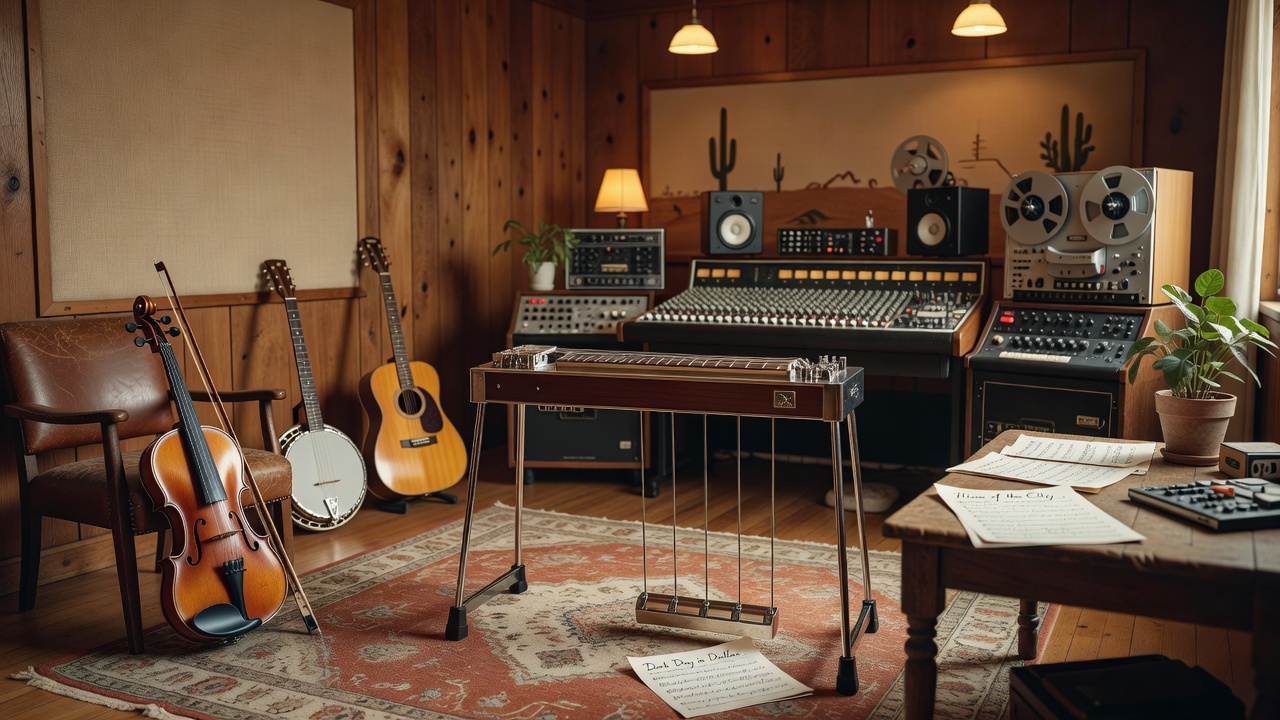
Texas singer-songwriter Jess Williamson's new album, *A Mile South of Heaven*, arrived October 9 on New West Records as a more reflective and collaborative work. Built around pedal steel, fiddle and banjo, and produced by Shooter Jennings at Sunset Sound, it marks a deliberate turn toward traditional country instrumentation and extended storytelling.
A Return to Traditional Instrumentation
Williamson's previous record leaned on more pop-oriented textures, and that shift drew a new audience to her work. With *A Mile South of Heaven*, she moved in the opposite direction, placing classic country sounds at the center of the songs. She has said she was uncertain whether listeners who arrived through her earlier work would stay for a record so dependent on lyrical storytelling and world-building. In the two weeks after release, she said, the response has been encouraging.
Collaboration and Letting Songs Breathe
The album reflects Williamson's openness to working with others. "Dark Day in Dallas" grew out of a writing retreat with Courtney Marie Andrews, Lola Kirke, Cornelia Murr and Katie Pearlman, and it draws on a lyric Williamson had carried for more than a decade. Her work with Jennings followed a similar approach. He encouraged her to keep songs at full length, including the roughly four-minute "Hum of the City," rather than trimming them for radio, and he treated her hesitations as possibilities to explore.
Sunset Sound and the Shift in Her Approach
Recording at Sunset Sound, a studio with a long history of notable records, gave Williamson a different sense of what her music could become. Coming from independent and DIY releases, including three albums on the Brooklyn label Mexican Summer, she described the sessions as a reminder that the songs could go wherever they needed to. She contrasted that hands-on, room-based process with more computer-driven methods, calling the studio experience a welcome throwback to how she imagined making records as a child.