
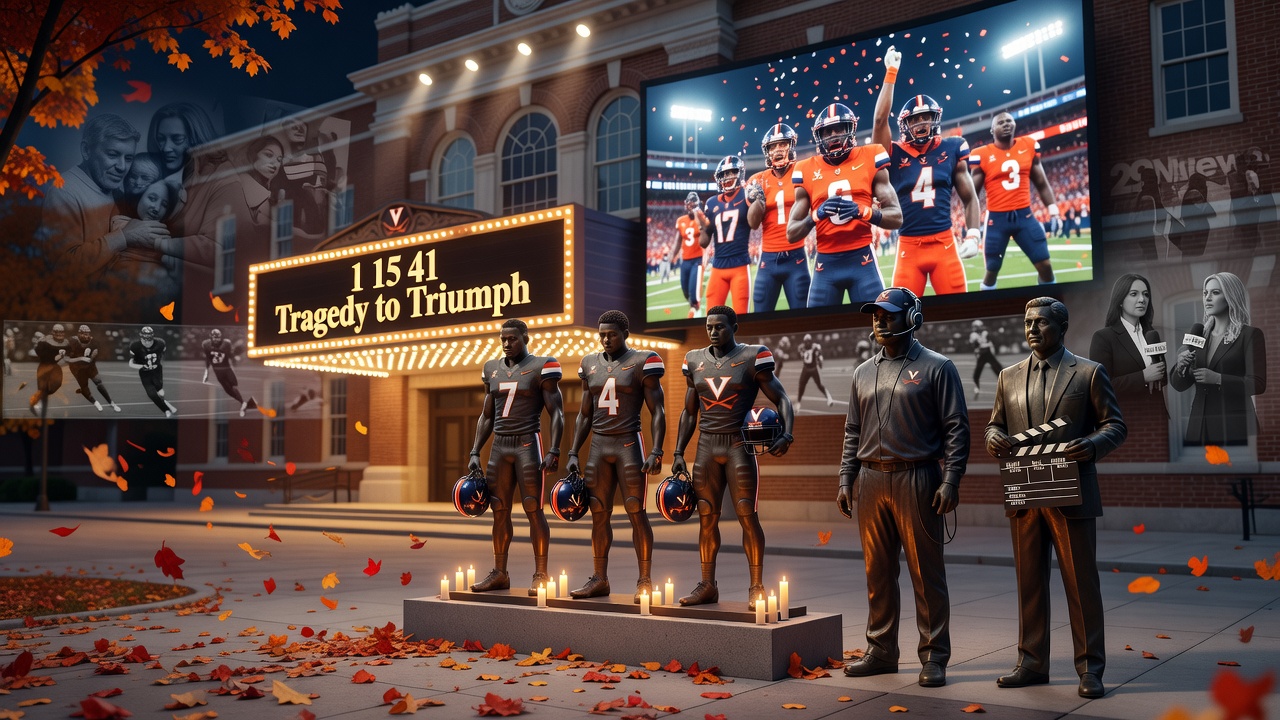
The 39th Virginia Film Festival, a University of Virginia program, runs through Sunday, Oct. 25, and ends with "1 15 41 Tragedy to Triumph," a 75-minute documentary about the UVA football program after the November 2022 shooting that killed three players. The world premiere is set for 7:30 p.m. Sunday, followed by a discussion with the director, the head coach and a player.
A film built around grief and rebuilding
The documentary honors Devin Chandler, Lavel Davis Jr. and D'Sean Perry, the three players killed in the Nov. 13, 2022, shooting that also injured two other students. According to the festival's account, it follows the families, survivors and teammates as they share their grief and work to keep the three men's memories alive while the team moves forward.
The film also revisits the renewed pain that came with the sentencing of the man responsible for the killings. Alongside that story runs the team's turnaround under head coach Tony Elliott, which the film traces to a school-record 11-win season in 2025 and an appearance in the ACC Championship game. Because the film frames these two threads together, viewers see sport less as a simple success story than as a place where collective mourning and competition coexist.
Who made it and how
Greg Frith, a seven-time Emmy-winning senior producer and director at NFL Films, directed the project. NFL Films produced it with BD4 Studios and UVA Athletics. The documentary combines interviews with families, players and athletic administrators with behind-the-scenes and game footage, and it includes reporting from former 29News journalists Avery Davis and Maggie Glass.
That production history matters for how the film will be read. A documentary made in partnership with the athletic department it portrays carries a different kind of authority than an independent portrait, and audiences will likely weigh its access against its institutional origins. The festival's own description calls it "a remembrance and a celebration at the same time," which is a framing the film's makers and presenters have chosen, not a neutral verdict.
The festival context
The closing film sits within a weekend that also includes Virginia-made work, international features, comedies and industry discussions. Executive director Jody Kielbasa has argued that a theatrical screening creates a shared emotional experience that home viewing does not replicate, a claim that is especially relevant for a film about a community absorbing a shared loss. Festival organizers have placed the documentary at the end of the weekend, when a Charlottesville audience is most likely to be directly connected to the events it portrays.
Readers should note the limits of what is known here. The festival materials describe the film's subjects, structure and participants, but a full assessment of its editorial choices will depend on screening it. Coverage of the premiere and the discussion will show how the filmmakers and the coach address the tension between commemoration and promotion that the material inevitably raises.