
The Swedish Academy has awarded the 2025 Nobel Prize in Literature to Canadian writer Anne Carson, whose experimental, genre-blurring work has drawn both acclaim and sharp criticism. An opinion essay argues that the honor rewards fragmentation over the shared storytelling it believes literature should serve. The debate says as much about the prize's direction as it does about one writer.
What the Essay Argues
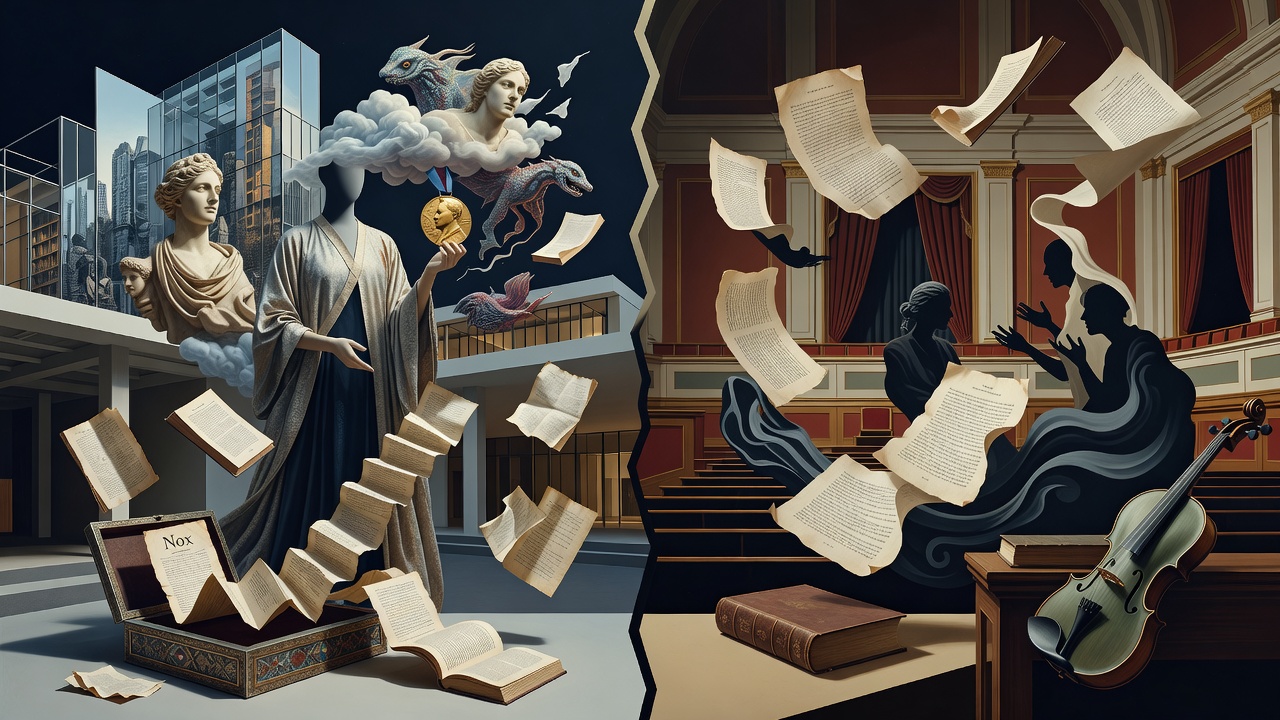
The essay describes Carson's books as deliberately absurd, mixing ancient figures with modern settings and inviting narrators such as clouds or monsters. It points to Nox, which is printed as a single accordion-folded sheet inside a box, and Float, a set of booklets meant to be read in random order. The author sees these choices as a rejection of the conventions that once gave literature shape and moral weight.
Acclaim Versus Accessibility
Carson's supporters tend to praise the same qualities the essay criticizes. Critics often describe her style as minimalist, surreal, and avant-garde, and they treat its disorder as a serious literary method rather than a lapse in craft. The gap between these readings is central to the argument: one side sees formal risk, the other sees a loss of narrative purpose.
Why the Debate Matters
Nobel selections are read as signals about what the wider literary world values, so the reaction carries weight beyond a single author. Readers who favor clear narrative may see the award as confirmation of a trend toward the experimental. Those who admire formal innovation may see the critique as a restatement of familiar objections to modernism. Either way, the argument rests on questions of taste and purpose that the essay makes more than it proves.