
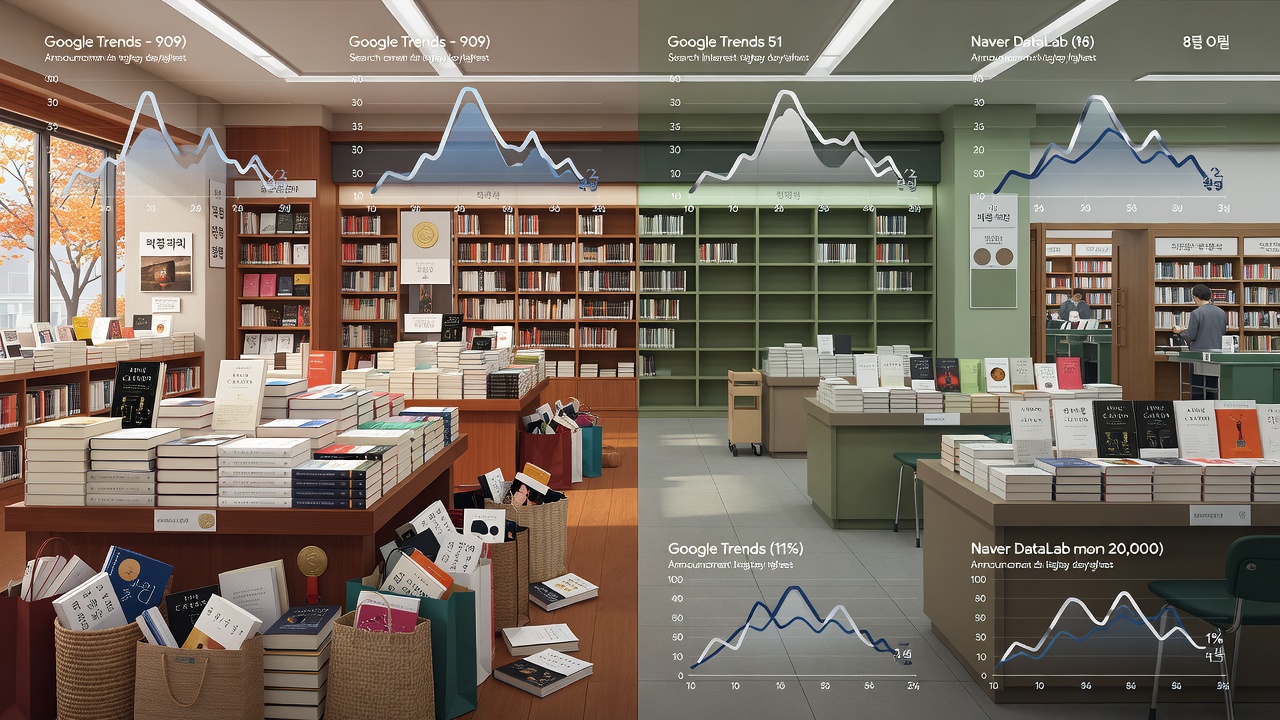
Kyobo Book Centre data shows that books by Nobel Prize in Literature laureates sell far faster in the announcement month than at any other time. For most winners, that momentum fades within a few months, while libraries keep lending the same titles at a steadier pace.
A sharp October spike
When the Nobel Foundation names a literature laureate, bookstores feel the change almost immediately. Kyobo Book Centre's Gwanghwamun branch in central Seoul sold out Anne Carson's books by the morning of Oct. 9, hours after she was named the 2025 winner, and a fresh shipment disappeared that afternoon. Across the 2015 to 2025 period, the store's figures show October sales of Nobel laureates' works running between 51 and 909 times their earlier monthly levels.
Why the effect rarely lasts
For most laureates, the surge is brief. By the following spring, monthly sales for most winners had fallen to less than one-tenth of their October level. Han Kang, Korea's first Nobel literature laureate, followed the same pattern: by February 2025, her sales had dropped to 7.9 percent of October 2024 levels. Her earlier novel "The Vegetarian" had already become a major seller after its 2016 Booker Prize win, which limited how much the Nobel could add. Svetlana Alexievich, the 2015 laureate, was the main exception, but her titles had only recently been published in Korea, so her sales were building from a low base.
Libraries tell a slower story
Public library borrowing follows a different timeline. According to an analysis of National Library of Korea data, borrowing for Jon Fosse and Han Kang peaked about two months after their wins rather than in October. A National Library of Korea official said that rising demand leads libraries to buy more copies, which keeps waiting lists long and borrowing steady. Han's titles were borrowed more than 20,000 times a month from September through December 2025.
Online attention fades quickly
Search interest declines faster still. Searches for Carson peaked on Oct. 8, the day of the announcement, and fell to one-tenth of that level within eight days, according to Google Trends and Naver DataLab. The findings suggest the Nobel can lift a book's sales and loans for months or longer, but casual online curiosity tends to disappear within days.